
Local resident Julie Sherman talks about issues arising from the old town tip, working at the rubber factory and passes on memories of unusual bounties at the tip
Written by Gillian Livingstone and based on an interview with Julie Sherman, by Louise Weissel
Julie Sherman was born on 1 July 1952 and moved to Bradford on Avon in 1971 when she was nineteen. She found it a close-knit community and after six months, felt very much at home, able to chat easily with her neighbours and people around town. She lived at the back of the Old Dump.
The neighbourhood felt safe and children would play in the road or sit on the wall, chatting. They would sometimes venture down to the river, although they weren’t supposed to because the banks were not stable and there was always a risk of falling in.
In the period Julie describes there was much more industry in the town than at present. Her mother worked locally in an electric company, and it was convenient to visit her daughter for a cup of coffee and a chat during her break. Seemingly, it was also convenient to offload unwanted material in the Old Dump. Julie remembers a succession of lorries making their way up St Laurence Road ‘which really ripped the road up,’ so much so it had to be tarmacked to mitigate the damage caused by the volume of traffic.
Julie herself worked weekends in the mushroom quarry in Bradford on Avon. In the nineteenth century as demand for quarried stone declined the tunnels were converted into sites for growing mushrooms, a practice that continued until the 1990s. According to a 1963 Pathe news item, 3,000lbs mushrooms were produced every day, requiring 70 tons of compost a week. Julie recalls how the spent growing medium was taken to the dump, and while the waste was unlikely to be harmful, this was a considerable amount of waste.
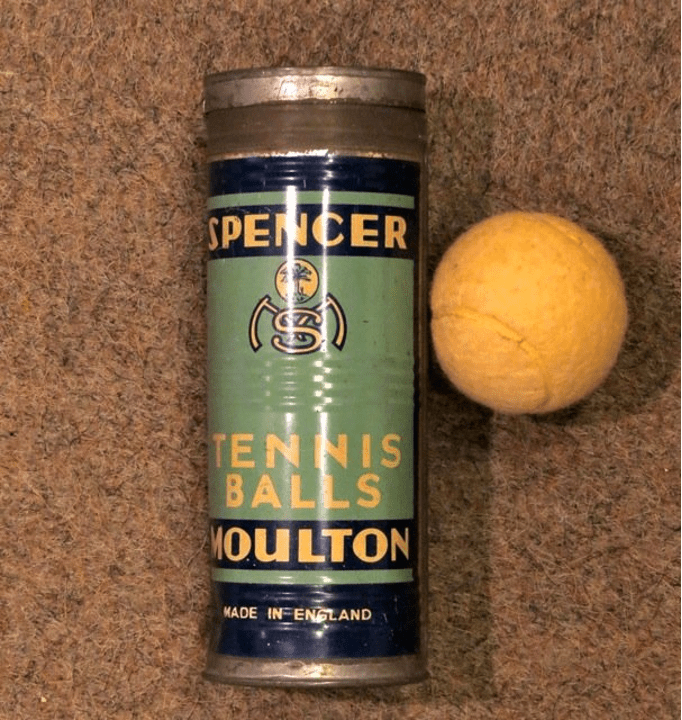
Julie shared another aspect of Bradford on Avon’s industrial past. She contributed to a ‘cottage industry’ of home-workers finishing tennis balls for the Spencer Moulton Rubber Company. It was hard work: they were given boxes of ten balls or ‘smalls’ which had to be covered in felt and then hand rolled to seal the joins. The adhesives were unpleasant to touch and the smell permeated the house. The women continued often late into the night, working to a deadline and to exacting standards. Her husband helped her when he wasn’t working night shifts at Avon Rubber, on assembly lines that produced rubber hoses and window wipers.
At this point Julie rarely visited the tip due to family commitments and her working life and so was not aware of infestations or nasty smells. Access was somewhat restricted by fencing and a gate but there was definitely a footpath, which cut through the enclosure. Julie remembers how a man used to keep a horse and some hens at the other end of the tip. She has since noticed that the path has not been included in the more recent building plans, which she feels is an important omission.
Julie was able to share another memory, told to her by a neighbour which brings some of the themes together. Apparently during the war every Saturday night American soldiers would dump tins of fruit, a way to lighten their baggage before they returned home. The children would intercept the dumping of requisitions and became happy recipients of the bounty.
The use of the area as a modern midden begs the question, what else was left there? Julie made a connection with Savernake Forest where ammunition stores left by American troops exploded leading to fires and extensive damage.
While there is limited evidence that the Americans left ammunitions, the historical lack of transparency and lax adherence to health and safety regulation have led to levels of mistrust and suspicion in the community. As Julie says, ‘They dumped everything, didn’t they? You don’t know what they are dumping. As they were dumping tins of fruit, they were dumping other things, what they didn’t want at the time.’
The interview with Martin Valentin corroborates her concerns, where he too notes the ‘surreptitious’ discarding of materials. ‘Asbestos, carcinogenic chemicals including aromatic amines and drums of cyanide’ were left there between the 1940s and 1960s. Without accurate mapping, locating these deposits is an impossible task which has implications for assessments in the pre-planning application period. Randomly placed test sites to monitor emissions will give only a partial account of the potential toxicity of the site.
When asked about the plans to build on the Old Dump, Julie is not happy. She is worried about the wild-life, and the cost of the houses which is likely to favour outsiders rather than local residents. That and the increased pressure on local services may well affect the social cohesion of the town, something she valued when she first came to live in Bradford on Avon.
Some background resources
 Save The Old Golf Course