
Records of a rubber factory worker indicate that drums of cyanide are buried beneath the old golf course
Written by Jessica Holtaway and based on an interview with Martin Valentin, by Louise Weissel on 24th August 2024.
Martin Valentin is an architect and local historian in Bradford on Avon. In this interview he discusses the historical dumping of hazardous materials in the area, referring to information shared by Pete McGregor, who worked in the Avon Rubber factory and had good knowledge of the dump.
Pete recalls large amounts of asbestos, carcinogenic chemicals including aromatic amines, and drums of cyanide (used for chrome plating and steel hardening, in the manufacturing of motorbikes) disposed of at the dump and in abandoned stone-workings, between the 1940s and 1960s. This is corroborated by Martin, who has seen one of these sites. Martin explains that, despite knowledge of these drums, in most cases ‘the location of the waste is like “pin the tail on the donkey”’. Because ‘disposal was surreptitious’ and no formal record exists, it is hard to pin-point the exact locations across the site of the old town dump – a significant issue when trying to gain an accurate survey of it. Geotechnical engineering firms test the toxicity of sites by choosing specific areas to drill and examine, but when waste disposal has been unmonitored, such tests only provide a small glimpse of a much bigger picture.
Pete’s memories echo those of Joan Allen, who also remembers large metal drums deposited on the tip (listen at 5 minutes in to the recording). She explains that households didn’t use these kinds of containers, indicating industrial waste deposits.
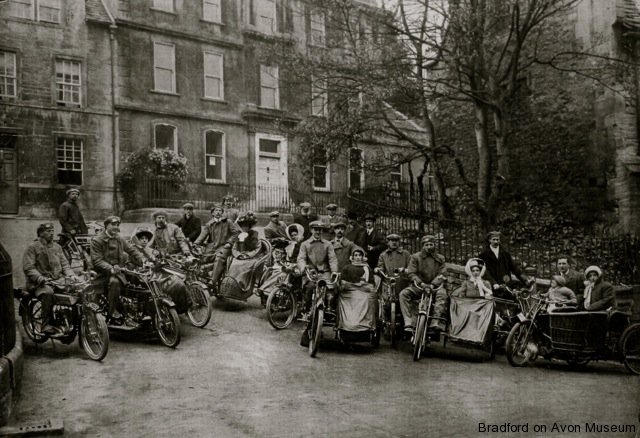
In 1972, experts from the Atomic Energy Authority establishment, Harwell were called in to treat 18 drums of cyanide that had been deposited in 1962, in mines added to Greenland Mills in 1972. Although the Bradford-on-Avon urban district council claimed there was ‘not likely to be any more hazardous waste’ deposited there, Valentin estimates that that there were likely many more drums than the 18 reported by the council: ‘a realistic estimate of cyanide drums would be well into triple figures’. The most likely area for this waste is the main dump which extends along the river, but it is possible that the drums were dumped at other areas of the site.
Speculating on the depth of the rubbish, Weissel and Valentin consider the ‘cliff’ next to the river, and the indication that the waste must be over 4 meters deep. Concerningly, Valentin recalls historic agreements with the local council to dump things in the river, which would have gone downstream and into the sea. He notes that some of the secrecy agreements might now have expired and suggests looking into the records of the urban district council at the local history centre for more information.
 Save The Old Golf Course