
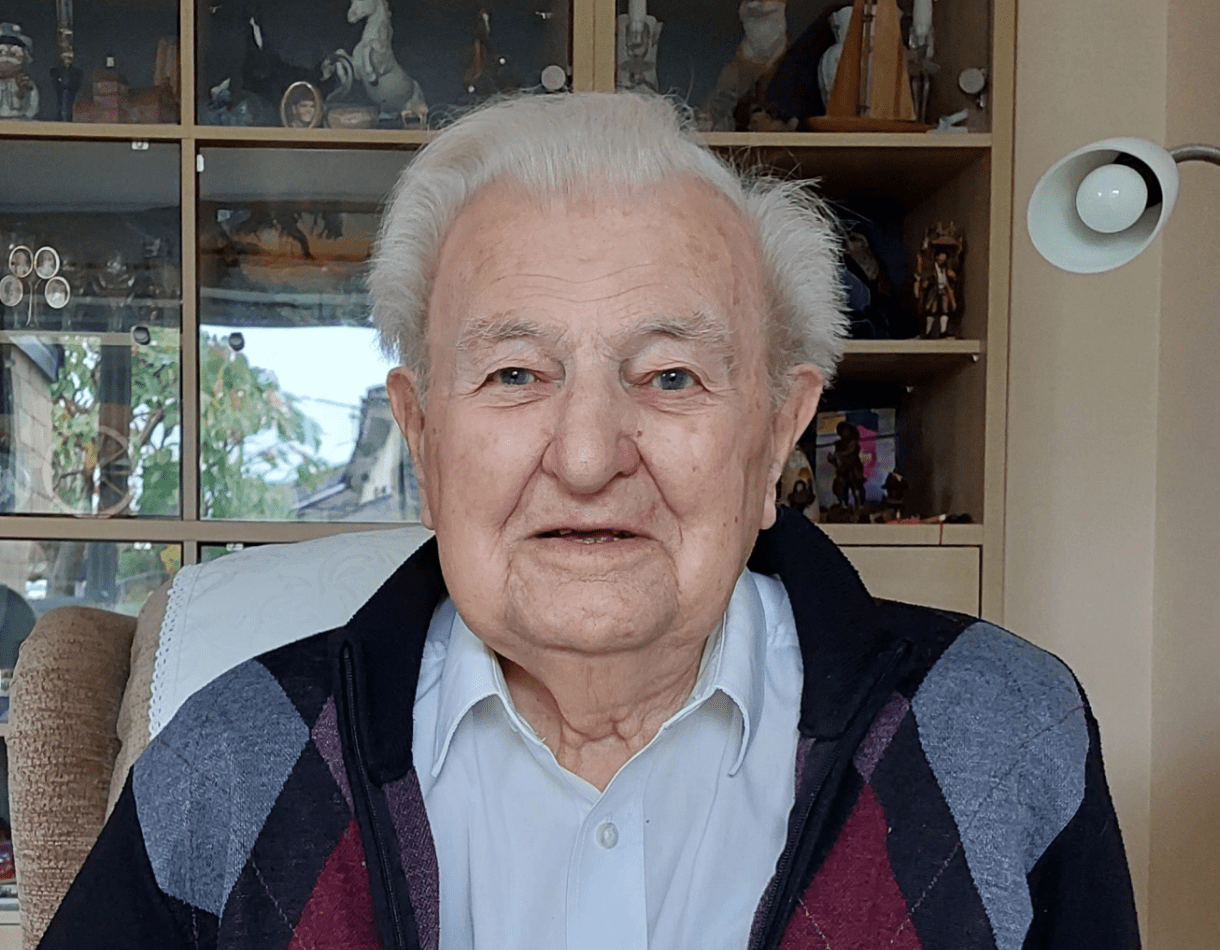
Written by Jessica Holtaway, based on an interview with Douglas Phillips conducted on August 30th 2024
98-year-old Douglas Phillips can still remember the acrid smell of burning chemicals rising from the old town tip, now known by locals as the ‘Old Golf Couse’. “The tip always used to be burning, 24/7” he recalls.
“I’d never buy a house there” says Douglas, discussing the potential new housing development, “knowing that there must be chemicals there…what happened to all the asbestos? It wasn’t wrapped up like they do these days.”
Douglas has lived in Bradford-On Avon since 1929, having moved there with his family aged 3. He has seen many world events unfold in the town parameters. For example, during World War 2, American soldiers were posted to Wiltshire. Continuing the racial segregation in the USA at that time, white American soldiers were situated in Trowbridge and Black American soldiers in Bradford-on-Avon.

Douglas remembers the rifle range used by the soldiers, in the fields between Becky Addy Wood and the waterworks. He questions what happened to the discarded ammunition and unexploded remnants of the war. It’s logical that some of this waste may have made its way to the town tip, which was largely unmonitored.
He reflects on the culture of respect in the 30s and 40s, particularly for authority figures. Within this culture, he recalls the complex relationship he had with his father: “My father was very strict. I wasn’t supposed to play with the rest of the children down the street, but I did.” On snowy days he would go to the slopes next to the old town tip and, with the local children, he would sledge down the hill, risking an icy plunge at the end of the slope where the field met the river.

Aged 14, Douglas began working for his father’s bakery situated at 25 Bridge Street. Although he had been studying at Green Park College in Bath, his father needed someone to deliver the bread, so Douglas left school to work for the family business.
Also working as a confectioner at the bakery, Douglas would watch dust carts driving past throughout the day to dump rubbish on the town tip. There is no record of what went into it. But, as Douglas explains, “nobody worried about it”.
Now, it’s a different story. As more people discuss the possibility of a new housing development, concerns are emerging around the risks of releasing these long-buried chemicals into the air and river. For now however, the undisturbed waste lies beneath layers of soil – a site of re-wilding, providing a wildlife corridor for bats, otters, owls, and more.
 Save The Old Golf Course